
custom mirrors
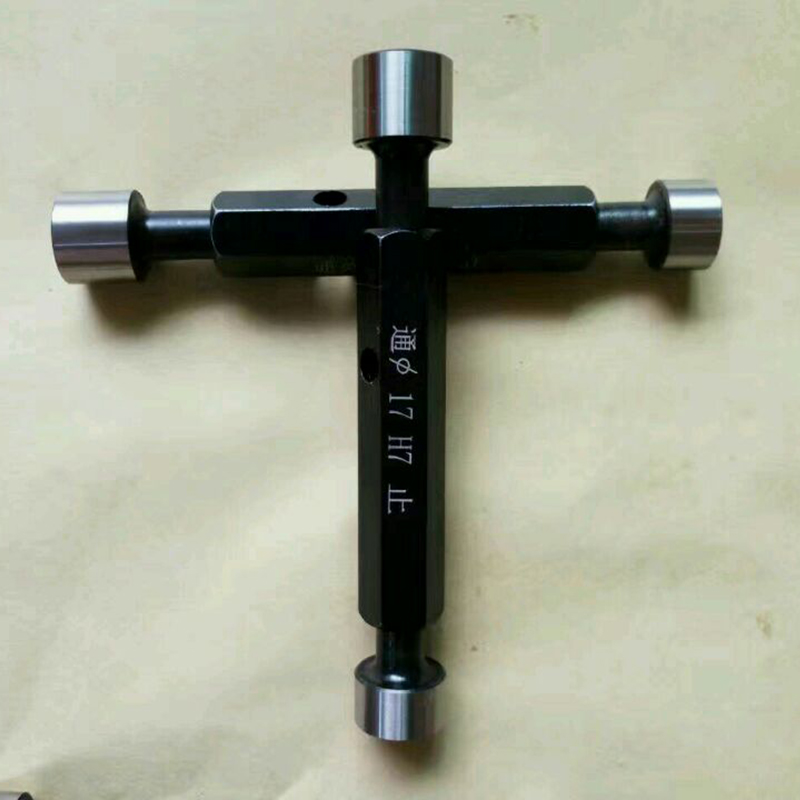
Understanding Internal Thread Gauges Importance and Application Internal thread gauges are essential tools used in various industries to ensure that threaded components meet specific standards and specifications. These gauges are crucial for the quality control of parts that have internal threads, such as pipes, bolts, nuts, and other fasteners used in mechanical systems. This article aims to explore the significance, types, and applications of internal thread gauges. What is an Internal Thread Gauge? An internal thread gauge is a precision instrument designed to measure and inspect the dimensions and functional characteristics of internal threads within holes. These gauges are typically used to ensure that the internal threads are cut to the correct size and pitch, conforming to specific standards such as those established by the American National Standards Institute (ANSI) or the International Organization for Standardization (ISO). Types of Internal Thread Gauges There are several types of internal thread gauges, each designed for specific applications and measurements 1. Go/No-Go Gauges This type of gauge consists of two components a Go gauge that should fit into the internal thread, and a No-Go gauge that should not fit. The proper functioning of these gauges ensures that the threads are within tolerance. If the Go gauge does not fit, or if the No-Go gauge fits, the threaded hole is considered out of specification. 2. Thread Plug Gauges These gauges are similar to go/no-go gauges, but they are utilized to check the thread depth and pitch diameter with more precision. This is particularly important in applications with high-stress components where even minor discrepancies can lead to catastrophic failures. internal thread gauge 3. Thread Pitch Gauges These gauges allow for the measurement of the pitch of the internal threads. By aligning the gauge with the threads, users can identify the thread pitch, which is crucial for ensuring compatibility with mating components. Importance in Manufacturing The use of internal thread gauges is vital for maintaining quality control in manufacturing processes. Ensuring proper thread dimensions is crucial for - Safety and Reliability Incorrectly sized threads can lead to failures in mechanical systems, which may pose safety risks. - Interchangeability Standardized threads ensure that components can fit together seamlessly, reducing the likelihood of production errors. - Cost-Efficiency By catching thread defects early in the manufacturing process, companies can save on costs associated with reworking or replacing defective parts. Applications Internal thread gauges are widely used across various industries, including automotive, aerospace, oil and gas, and manufacturing. For instance, in the automotive industry, precision-engineered components require accurate threading to ensure functionality and safety. In the aerospace sector, where weight and reliability are critical, the use of precise internal thread gauges helps maintain the integrity of components under stress. Conclusion In summary, internal thread gauges are indispensable tools in quality control, ensuring that internal threads meet required specifications. Their use across multiple industries underscores their importance in enhancing safety, reliability, and efficiency in manufacturing processes. By understanding and utilizing these gauges effectively, manufacturers can significantly improve product quality and performance.
about
custom mirrors
Understanding Measurement The 4% Foot Level with Ruler When it comes to measurement, precision is key, and tools like rulers become essential in various fields such as architecture, carpentry, and education. One intriguing aspect of measurement is how seemingly small percentages can lead to significant implications in real-world applications. The concept of the 4% foot level often ties into height measurements, adjustments, and standards across different disciplines. In this article, we will explore what the 4% foot level signifies, its applications, and the importance of accurate measurement with tools like rulers. The Basics of Measurement To understand the essence of the 4% foot level, we must first discuss measurement itself. Measurement involves assigning numbers to physical quantities. Rulers provide a straightforward way to measure lengths, widths, and height. The typical ruler, often marked in both inches and centimeters, enables individuals to ascertain dimensions accurately. Rulers can come in various formats. For instance, a standard wooden ruler usually measures 12 inches long, while a metric ruler can measure up to 30 centimeters. Both rulers are divided into smaller increments, allowing for precise readings. In fields where precision is paramount, such as engineering or construction, even a slight miscalculation can result in significant errors. This is where the 4% foot level can come into play, dictating specific thresholds for measurements. The Concept of the 4% Foot Level The term “4% foot level” might not be universally defined, but it can refer to several specific situations related to design and structural integrity. Generally, in contexts like building codes or safety regulations, a 4% variance could relate to allowable tolerances in height or levelness to ensure safety and functionality. For instance, in sloped surfaces, adherence to the 4% foot level could mean maintaining the slope within acceptable limits for accessibility and safety. 4 foot level with ruler In the construction industry, understanding and maintaining proper levels is crucial. The 4% foot level could be a guideline for setting the maximum allowable slope of a ramp, surface, or other structures. For instance, a ramp designed for wheelchair access must comply with the Americans with Disabilities Act (ADA), which stipulates that the slope should not exceed 112 ratio, corresponding to roughly 8.33%. If we calculate a 4% grade, this translates to a slope of about 1 inch of rise for every 24 inches of run. This ensures that those who may have mobility challenges can access buildings and public spaces safely. Using a Ruler for Precision To achieve accuracy in measurements relating to the 4% foot level, using a ruler effectively is essential. When measuring a slope or an elevation, one can use a level ruler to determine if the incline adheres to the specified percentage. For instance, suppose you want to create a ramp with a grade of 4%. By extending the ruler horizontally to a length of 12 inches, you can measure the rise; a rise of 0.48 inches would denote compliance with the 4% level standard. In practical applications, not only architects and engineers benefit from these measurements, but also DIY enthusiasts and everyday individuals undertaking home projects. A simple measuring task can lead to effective and safe solutions when one follows guidelines like the 4% foot level. Conclusion In summary, understanding the concept of the 4% foot level in combination with using rulers for measurement is integral to achieving accuracy across various fields. Whether in construction, design, or personal projects, maintaining precision ensures adherence to safety and performance standards. With the right tools and knowledge, anyone can achieve effective measurements that foster safe environments and functional designs. As we navigate the complexities of measurement, it becomes evident that small percentages can carry considerable weight in creating accessible, safe, and efficient spaces. Embracing accurate measurement practices ultimately leads to better outcomes in our built environment and daily lives.
-

High quality industrial productsagement

High quality industrial products
View Details -

Meet the diverse needs of customers

Meet the diverse needs of customers
View Details -

Strict quality control

Strict quality control
View Details -

Top raw materials

Top raw materials
View Details -

Trusted supplier

Trusted supplier
View Details
Our application

news and information
Water Pressure Regulation with Reliable Check Valves for Optimal System Performance
Understanding Water Pressure Check Valves Water pressure check valves are vital components in plumbi

Vanne papillon à 4 % pour des applications industrielles et de contrôle de fluides efficaces
La Robinetterie Le Cas de La Papillon à Quatre Pourcents Les vannes sont des composants essentiels
Valvola di cancello a flangia da 6 pollici
Un componente essenziale nei sistemi di gestione dei fluidi industriali è la valvola a saracinesca f
 English